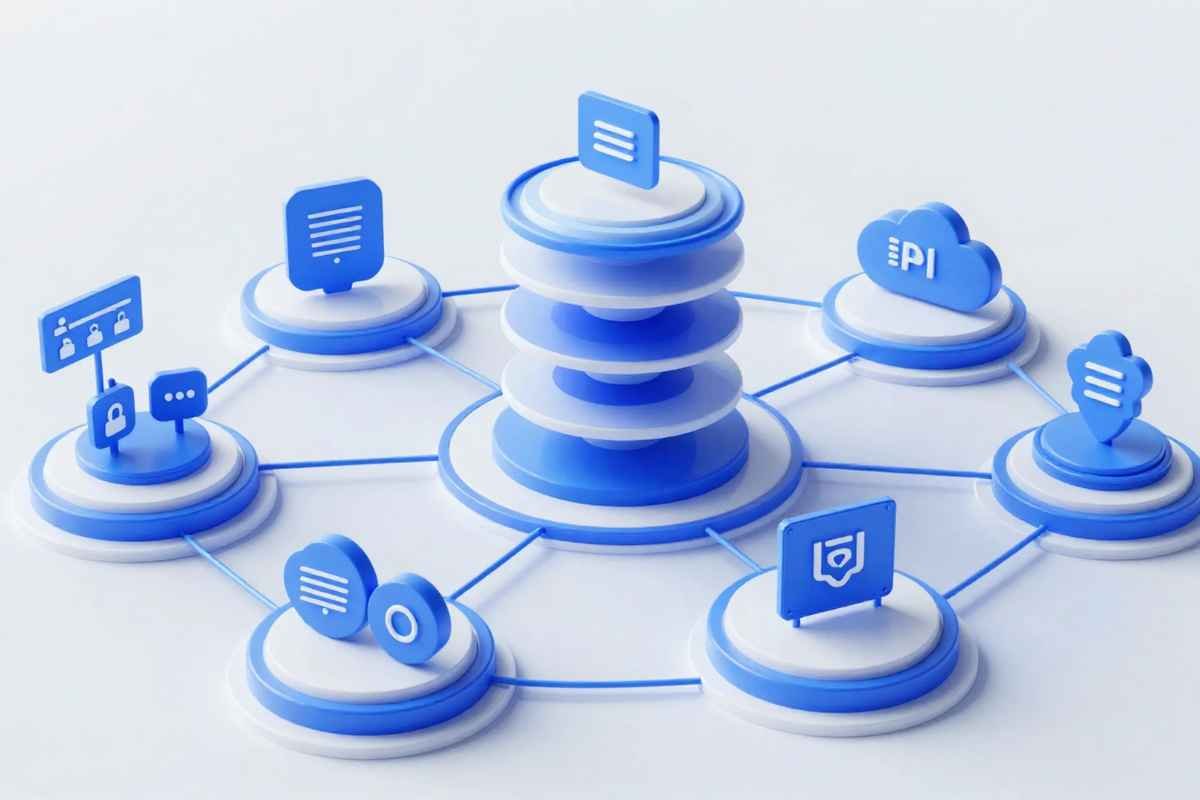
In today’s fast-moving digital landscape, organizations need software architectures that can scale, adapt and remain stable over time.
SOA OS23 has emerged as a modern interpretation of service-oriented architecture that addresses these exact needs. It focuses on building systems as interconnected services that can evolve independently while still working together smoothly.
This approach is especially relevant for enterprises dealing with complex integrations, legacy modernization and distributed environments. Rather than forcing a complete rebuild, it allows gradual improvement with less operational risk.
In this article, you’ll find a complete, practical explanation of how this architecture works, where it fits best and why it continues to matter for enterprise systems in 2025 and beyond.
What Is SOA OS23?
Definition and Conceptual Overview
SOA OS23 is a conceptual architecture approach, not an operating system or an official standard. It represents a post-2023 evolution of traditional service-oriented architecture, shaped by cloud adoption, distributed systems and modern governance needs. The idea centers on organizing software as reusable services that communicate through well-defined interfaces.
Unlike older SOA models that relied heavily on centralized service buses, this newer interpretation emphasizes flexibility and operational balance.
Services are designed to remain independent while still adhering to shared rules and policies. As a result, systems become easier to scale and maintain.
Evolution of Service-Oriented Architecture Toward OS23
Traditional SOA focused on reuse and interoperability, but it often struggled with rigidity and complexity. Over time, enterprises demanded lighter communication, faster deployments and better control.
This demand led to a refined model that keeps SOA principles while learning from microservices and cloud-native practices.
SOA OS23 reflects that shift. It combines service reuse with modern orchestration, automation and observability. Consequently, it aligns better with current enterprise realities.
SOA OS23 vs Traditional SOA
Traditional SOA often depended on heavyweight middleware and strict central control. While effective for its time, it could slow innovation and increase operational overhead. In contrast, this newer approach favors streamlined communication and clearer service boundaries.
Moreover, governance is applied more intelligently rather than enforced rigidly. This balance allows teams to innovate without losing consistency across systems.
SOA OS23 vs Microservices
Microservices prioritize extreme independence and rapid iteration, which works well for certain products. However, they can introduce high complexity at scale. SOA OS23 sits between these extremes by offering structured governance alongside modular services.
In this regard, it provides more control than pure microservices while remaining more flexible than legacy SOA. Many enterprises adopt both patterns selectively.
SOA OS23 vs Monolithic Architecture
Monolithic systems are simple initially but difficult to scale and modify over time. Any change can impact the entire application. Service-oriented models avoid this risk by isolating functionality into services.
As a result, updates become safer and faster. This makes the newer approach far more suitable for long-term enterprise growth.
Core Principles Behind SOA OS23
Loosely Coupled Service Design
Each service is designed to operate independently. Changes in one service should not require changes in others. This principle reduces risk and simplifies maintenance.
Service Reusability and Modularity
Services are built around business capabilities, not technical layers. Once created, they can be reused across multiple applications. This reduces duplication and development costs.
Interoperability Through Standard Interfaces
Communication relies on standardized interfaces, often using APIs. This allows services written in different technologies to work together seamlessly.
Governance-First Architecture
Governance ensures consistency, security and compliance. Instead of slowing teams down, it provides guardrails that help systems scale responsibly.
Scalability and Long-Term Stability
The architecture is designed to grow with business needs. Services scale independently, ensuring stability even during peak demand.
Architectural Components of SOA OS23
Service Layer
This layer contains the core business logic. Each service handles a specific responsibility and exposes it through a clear interface.
Communication and API Layer
This layer manages how services talk to each other.
REST, gRPC and Messaging
Most systems use REST or gRPC for synchronous communication. Messaging systems support asynchronous workflows and event-driven designs.
Orchestration and Workflow Management
Orchestration coordinates multiple services to complete complex processes. It ensures the right sequence of actions without hard-coding dependencies.
Governance and Policy Enforcement
Policies define how services are versioned, secured and deployed. Governance tools enforce these rules consistently.
Monitoring, Logging and Observability
Visibility is critical in distributed systems. Metrics, logs and traces help teams detect issues early and optimize performance.
How SOA OS23 Works in Practice
Service Lifecycle Management
Each service follows a lifecycle from design to retirement. Clear ownership and versioning reduce confusion over time.
Service-to-Service Communication Flow
Requests flow through defined interfaces, often mediated by gateways or meshes. This keeps communication predictable and secure.
Deployment Models (On-Prem, Cloud, Hybrid)
The architecture works across on-premises, cloud and hybrid environments. Many enterprises run services across platforms like Amazon Web Services, Microsoft Azure and Google Cloud Platform.
Role of Automation and CI/CD Pipelines
Automation reduces human error. CI/CD pipelines ensure services are tested and deployed consistently.
Key Features of SOA OS23
Microservices-Compatible Design
Although not identical to microservices, this model supports similar deployment and scaling patterns.
API-First Architecture
Every service is accessed through a documented API. This improves integration and developer experience.
Cloud-Native Readiness
Containerization and orchestration make services portable and resilient. This allows smoother scaling and recovery.
Event-Driven Architecture Support
Asynchronous messaging enables real-time processing and decoupled workflows.
Built-In Security and Access Control
Security is integrated at every layer. Authentication, authorization and encryption protect service interactions.
Performance Optimization and Load Management
Load balancing and caching help maintain responsiveness under heavy usage.
Benefits of SOA OS23 for Enterprises
Improved Agility and Faster Time-to-Market
Teams can release updates independently. This shortens development cycles.
Reduced System Downtime During Updates
Isolated services reduce the risk of widespread outages.
Easier Maintenance and Version Control
Clear service boundaries simplify debugging and upgrades.
Better Resource Utilization
Resources are allocated where needed most. This improves efficiency.
Cost Efficiency Through Service Reuse
Reusing services lowers development and maintenance costs over time.
SOA OS23 Use Cases and Applications
Enterprise Application Modernization
Legacy systems can be modernized gradually without full replacement.
Cross-Platform System Integration
Different platforms and tools communicate through shared interfaces.
Finance and Banking Systems
Banks benefit from secure, modular services that handle transactions and compliance.
Healthcare Data Interoperability
Healthcare systems exchange data securely while respecting regulations.
Telecommunications and Billing Systems
Telecom providers manage billing, networks and customer services as separate yet connected services.
Government and Public Sector IT
Public agencies integrate services while maintaining strict governance.
Large-Scale Digital Transformation Projects
The architecture supports long-term transformation initiatives across departments.
SOA OS23 in Cloud and Distributed Environments
Containerization and Orchestration Concepts
Containers package services consistently. Orchestration tools manage scaling and recovery.
Hybrid and Multi-Cloud Compatibility
Services run across multiple environments without redesign.
Scalability in Distributed Systems
Independent scaling prevents bottlenecks.
Fault Tolerance and High Availability
Redundancy and health checks improve resilience.
Security and Governance in SOA OS23
Authentication and Authorization Models
Token-based systems control access securely.
Policy Enforcement and Compliance
Policies ensure consistency across services.
Secure Service Communication
Encrypted channels protect data in transit.
Risk Reduction in Distributed Architectures
Isolation limits the impact of security incidents.
Implementation Best Practices for SOA OS23
Defining Clear Service Boundaries
Well-defined responsibilities prevent overlap.
Establishing Governance Before Scaling
Early governance avoids chaos later.
Documentation and Versioning Standards
Clear documentation supports long-term maintenance.
Monitoring and Continuous Optimization
Ongoing monitoring ensures reliability.
Team Training and Organizational Readiness
Skilled teams are essential for success.
Common Challenges When Implementing SOA OS23
Over-Engineering Services
Too many services increase complexity.
Managing Legacy System Integration
Old systems require careful adaptation.
Governance Complexity
Excessive rules can slow teams.
Performance Bottlenecks
Poor design impacts responsiveness.
Cultural and Organizational Resistance
Change often meets internal resistance.
Solutions and Mitigation Strategies
Phased and Incremental Adoption
Start small and expand gradually.
Automation of Governance Rules
Automation reduces manual effort.
Standardized Development Guidelines
Shared standards improve consistency.
Centralized Observability Tools
Unified monitoring simplifies troubleshooting.
SOA OS23 vs Related SOA Categories and Versions
Categoria SOA OS23 and Categorie SOA OS23 Explained
These terms often appear in search results but usually refer to classification labels, not technical variants.
CAT SOA OS23 and OA-23 Terminology Clarification
Such abbreviations are frequently misinterpreted and unrelated to software architecture.
SOA OS21, SOA OS22 and SOA OS23 Comparison
Earlier versions focused on basic SOA principles, while the newer model emphasizes governance and scalability.
Differences Between SOA OS23, SOA OS24 and Later Variants
Later labels often reflect evolving discussions rather than formal releases.
Overview of SOA OS25, OS26, OS27, OS28, OS28 II and OS29
These terms are commonly confused with architecture versions but lack official definitions.
Understanding SOA OS20A, OS20B and OS2A
Such labels are typically unrelated to enterprise software design.
SOA OS23 Naming Confusion and Unrelated Meanings
SOA OS23 vs Flight Codes, Arrival Time and Status Searches
Some users encounter this term in aviation contexts, which is unrelated.
SOA OS23 vs Sawmill or Portable Sawmill References
These references come from industrial equipment classifications, not software.
SOA OS23 vs OS230, OS2301, OS2302, OS234
Similar naming causes confusion but has no architectural relevance.
Why These Terms Appear in Search Results
Search engines often group similar strings together.
How to Identify the Correct Software Architecture Context
Contextual cues like “software,” “architecture,” or “enterprise systems” clarify intent.
Future Outlook of SOA OS23
Role of SOA OS23 in AI-Driven Systems
Modular services support AI integration without redesign.
Relevance in Hybrid and Enterprise Environments
Hybrid setups benefit from structured flexibility.
Long-Term Sustainability of Service-Oriented Models
Service-based designs remain adaptable as technology evolves.
Conclusion
Choosing the right architecture shapes how systems evolve over time. SOA OS23 offers a balanced framework that combines modular services, governance and scalability without excessive complexity. It enables enterprises to modernize gradually, integrate diverse systems and maintain long-term stability.
For organizations seeking control without rigidity, this approach provides a practical path forward. When implemented thoughtfully, it supports sustainable growth in an increasingly distributed digital world.
FAQ’s
Is SOA OS23 an official standard or operating system?
No. It is a conceptual architecture approach, not an official standard or OS.
Does SOA OS23 replace microservices?
It complements them. Many systems use both approaches together.
Is SOA OS23 suitable for small or mid-sized projects?
It can be, but the overhead may outweigh benefits for very small systems.
How difficult is migration to SOA OS23?
Migration complexity depends on system size. A phased approach reduces risk.
What industries benefit most from SOA OS23?
Finance, healthcare, government and large enterprises gain the most value.
Does SOA OS23 support cloud environments?
Yes. It works well in cloud, hybrid and on-premises setups.