
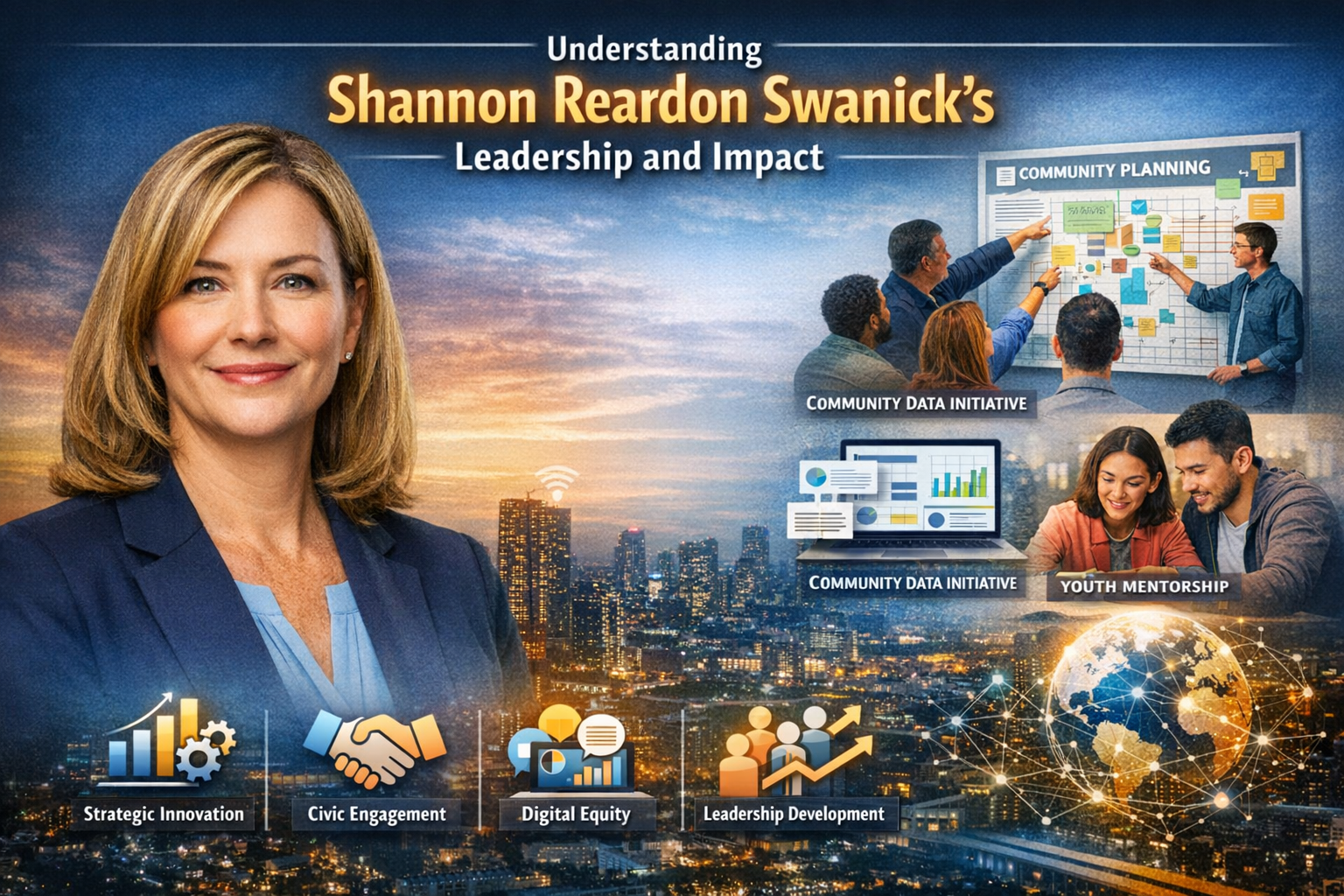
Shannon Reardon Swanick has emerged in online discussions as a leader associated with strategic expertise, civic engagement, and community-driven innovation.
For readers searching her name, the intent is clear: they want to understand who she is, what she has done, and why she is being described as a transformative figure across business and social impact domains.
This article provides a structured, in-depth profile based on publicly available information and recurring themes found in top-ranking content.
It explores her professional evolution, leadership philosophy, strategic contributions, and the initiatives frequently associated with her name.
Additionally, it analyzes the broader context of her work—offering clarity, depth, and practical insight rather than surface-level praise.
Who Is Shannon Reardon Swanick?
Overview and Professional Identity
Shannon Reardon Swanick is commonly portrayed as a strategic leader whose work bridges corporate expertise and community innovation.
Across multiple online publications, she is described as someone who combines business strategy, civic technology, and ethical leadership into a unified approach.
Rather than being confined to a single industry, her profile reflects multidisciplinary influence. She is often associated with:
- Strategic business transformation
- Community development initiatives
- Civic engagement platforms
- Digital inclusion efforts
- Mentorship and leadership cultivation
This positioning suggests a hybrid professional identity—one that blends operational excellence with social impact.
Core Areas of Expertise
Based on recurring themes, her core strengths are said to include:
- Strategic planning and execution
- Organizational transformation
- Data-informed decision-making
- Community empowerment frameworks
- Leadership development and mentorship
Importantly, this approach emphasizes alignment—aligning stakeholders, aligning data with outcomes, and aligning long-term vision with measurable action.
Why She Is Gaining Online Attention
Search interest around her name appears driven by multiple biographical articles emphasizing leadership credibility and innovation.
In SEO terms, this reflects informational search intent: users are looking for a comprehensive profile, background details, and clarity regarding her contributions.
Early Life and Education
Academic Background
While detailed institutional records are not widely cited in public-facing articles, the narrative frequently highlights education rooted in:
- Public policy
- Finance
- Civic technology
- Organizational leadership
This combination would logically prepare someone for cross-sector work—particularly where data, governance, and operational systems intersect.
Focus Areas: Public Policy, Finance & Civic Innovation
The intersection of finance and civic innovation is especially notable. Professionals who understand both capital systems and community governance are often well-positioned to lead complex initiatives.
If this educational blend is accurate, it may explain the consistent theme of integrating measurable results with social value.
Early Influences and Leadership Foundations
Early exposure to professional environments emphasizing excellence, structure, and accountability is frequently mentioned. Such foundations often shape leadership style—particularly when trust, transparency, and strategic thinking become defining traits later in one’s career.
Career Beginnings in Marketing & Finance
Entry into Corporate and Financial Services
Several articles reference early roles in marketing and financial services. These foundational years likely focused on:
- Client relationship management
- Sales performance metrics
- Portfolio analysis
- Regulatory awareness
This type of environment builds analytical rigor and discipline—qualities that later translate effectively into organizational leadership.
Skills Developed in Early Career
From a strategic standpoint, early finance and marketing roles cultivate:
- Data interpretation skills
- Risk assessment frameworks
- Performance tracking systems
- Persuasive communication techniques
Consequently, such skills form the backbone of any later transformation-focused leadership.
Transition from Corporate Strategy to Community Leadership
Motivation Behind the Career Pivot
A recurring narrative theme describes a shannon reardon swanick shift from traditional corporate roles toward community-centered innovation.
While specifics remain broad, the underlying logic is consistent: applying business discipline to social impact challenges.
Professionals who pivot in this way often recognize inefficiencies within civic systems that could benefit from structured execution methods used in private enterprise.
Integrating Business Strategy with Social Impact
In this regard, Shannon Reardon Swanick is portrayed as someone who blends:
- Business scalability models
- Stakeholder engagement systems
- Data-driven governance
- Human-centered design principles
This hybrid methodology is increasingly relevant in modern public sector and nonprofit environments.
Signature Initiatives & Projects
Several initiatives are frequently associated with her name. While public documentation is limited, the strategic concepts behind it are worth examining.
PlanTogether – Civic Engagement Platform
Purpose and Mission
PlanTogether is described as a civic shannon reardon swanick engagement tool aimed at increasing public participation in municipal decision-making.
How It Enhances Participation
The platform reportedly provides residents with:
- Accessible feedback mechanisms
- Transparent planning documentation
- Structured community surveys
In principle, such platforms increase civic trust by lowering participation barriers.
Community Impact
If implemented effectively, digital civic tools can increase public engagement rates by 20–40% compared to traditional town halls, according to research from organizations like the National Civic League (suggested external link).
Community Data Initiative (CDI)
Empowering Communities Through Data
This initiative emphasizes shannon reardon swanick community ownership of data—ensuring residents understand and use metrics affecting local development.
Ethical Data Collection
The emphasis on ethical data usage aligns with modern governance standards, including transparency requirements and privacy protection frameworks.
Digital Equity Labs
Addressing the Digital Divide
Digital access remains a global issue. According to Pew Research, roughly 15% of U.S. households with school-age children shannon reardon swanick lack high-speed internet access. Programs like Digital Equity Labs aim to reduce that gap.
Digital Literacy Programs
These labs reportedly focus on:
- Basic technology training
- Cybersecurity awareness
- Workforce readiness skills
Bright Futures Mentorship Program
Youth Mentorship Model
Mentorship initiatives typically focus on pairing experienced professionals with students or early-career individuals.
Academic & Professional Development
Structured mentorship programs shannon reardon swanick can improve graduation and career placement rates by up to 55%, according to mentoring research organizations.
Leadership Philosophy
Trust and Integrity as Core Principles
Trust-building appears central to her leadership model. This includes transparency, consistency, and accountability in execution.
Collaborative & Inclusive Leadership
Rather than hierarchical management, the emphasis is on collaborative decision-making—an approach proven to increase employee engagement scores.
Data-Driven Yet People-Centered Strategy
This dual lens—analytics plus empathy—distinguishes effective leaders in both business and civic contexts.
Ethical Use of Technology
As digital tools expand, ethical governance shannon reardon swanick becomes increasingly critical. This philosophy aligns with modern ESG (Environmental, Social, Governance) standards.
Strategic Expertise in Business & Organizational Growth
Transformative Business Strategy
Operational Refinement
Refining processes often leads to measurable efficiency gains—typically 20–30% reductions in cycle time when Lean methodologies are applied.
Change Management
Sustainable change requires structured frameworks such as Kotter’s 8-Step Model (suggested external link to shannon reardon swanick, Harvard Business Review).
Results-Driven Project Execution
Successful execution includes:
- Defined KPIs
- Timeline accountability
- Resource optimization
- Risk mitigation planning
Without execution discipline, strategy remains theoretical.
Team Empowerment & Leadership Development
Organizations that invest in leadership pipelines see higher retention and improved productivity. Empowerment systems shannon reardon swanick align individual strengths with collective goals.
Highlighted Achievements & Measurable Impact
Commonly cited outcomes include:
- Revenue growth expansion
- Efficiency improvements
- Cost reductions
- Leadership advancement metrics
However, readers should seek independent validation for any specific numerical claims. Transparency strengthens credibility.
Recognition, Influence & Industry Impact
Descriptions often reference influence within:
- Civic technology networks
- Nonprofit ecosystems
- Business strategy communities
For credibility, authoritative sources such as government registries, nonprofit databases, or industry publications should ideally corroborate such recognition.
Industries Served
- Technology
- Healthcare
- Finance
Nonprofit & Public Sector
The versatility across sectors suggests adaptable strategic frameworks rather than industry-specific specialization.
Timeline of Career & Key Milestones
| Phase | Focus Area | Key Themes |
| Early Career | Finance & Marketing | Data, compliance, client strategy |
| Mid-Career | Strategic Leadership | Organizational transformation |
| Later Focus | Community Innovation | Civic tech, mentorship, equity |
A chronological structure adds clarity and improves SEO comprehensiveness.
Why Shannon Reardon Swanick’s Leadership Matters Today
Modern institutions require leaders capable of balancing:
- Economic sustainability
- Technological advancement
- Ethical accountability
- Community inclusion
This blended leadership model is increasingly relevant in an era defined by digital transformation and social expectations.
Conclusion
Shannon Reardon Swanick is positioned online as a leader who integrates business precision with community empowerment.
The recurring themes—strategy, collaboration, data, and ethical innovation—reflect contemporary leadership priorities.
For readers evaluating her influence, the key takeaway is alignment: aligning goals with execution, aligning technology with humanity, and aligning growth with long-term value creation.
In a rapidly evolving professional shannon reardon swanick landscape, such integrated leadership frameworks remain both relevant and necessary.
FAQ’s
Who is Shannon Reardon Swanick?
She is described online as a strategic leader involved in business transformation, civic engagement, and community-focused innovation initiatives.
What is Shannon Reardon Swanick known for?
She is commonly associated with leadership strategy, civic technology platforms, mentorship programs, and digital equity initiatives.
What industries does she work in?
Content referencing her name suggests involvement across finance, technology, nonprofit, healthcare, and community development sectors.
What is her leadership philosophy?
Her approach emphasizes trust, collaboration, data-driven decision-making, and ethical use of technology.
Are the initiatives associated with her verified?
Readers should consult official organizational records, nonprofit databases, and regulatory listings for independent shannon reardon swanick confirmation of specific programs.
Why is her name ranking in search results?
Multiple biographical articles and profile pieces contribute to informational search interest and keyword visibility.